Embark on a delightful sewing journey with our comprehensive guide on “How to Sew a Simple A-Line Skirt.” This tutorial is designed to demystify the process, making it accessible and enjoyable for sewers of all skill levels, particularly those new to garment construction. We will explore the fundamental characteristics of this timeless silhouette, highlight its beginner-friendly advantages, and provide a clear roadmap of the essential steps involved, from selecting your pattern to adding the final, polished touches.
This guide will equip you with the knowledge to choose the right pattern, prepare your fabric with care, and accurately cut your pieces. You will learn effective techniques for assembling the skirt panels, creating a neat waistband, and incorporating pockets if you desire. Furthermore, we will delve into the art of hemming for a professional finish and discuss essential sewing machine techniques and adjustments to ensure a perfect fit.
Finally, we will cover adding a closure, bringing your beautifully crafted A-line skirt to life.
Introduction to A-Line Skirt Construction
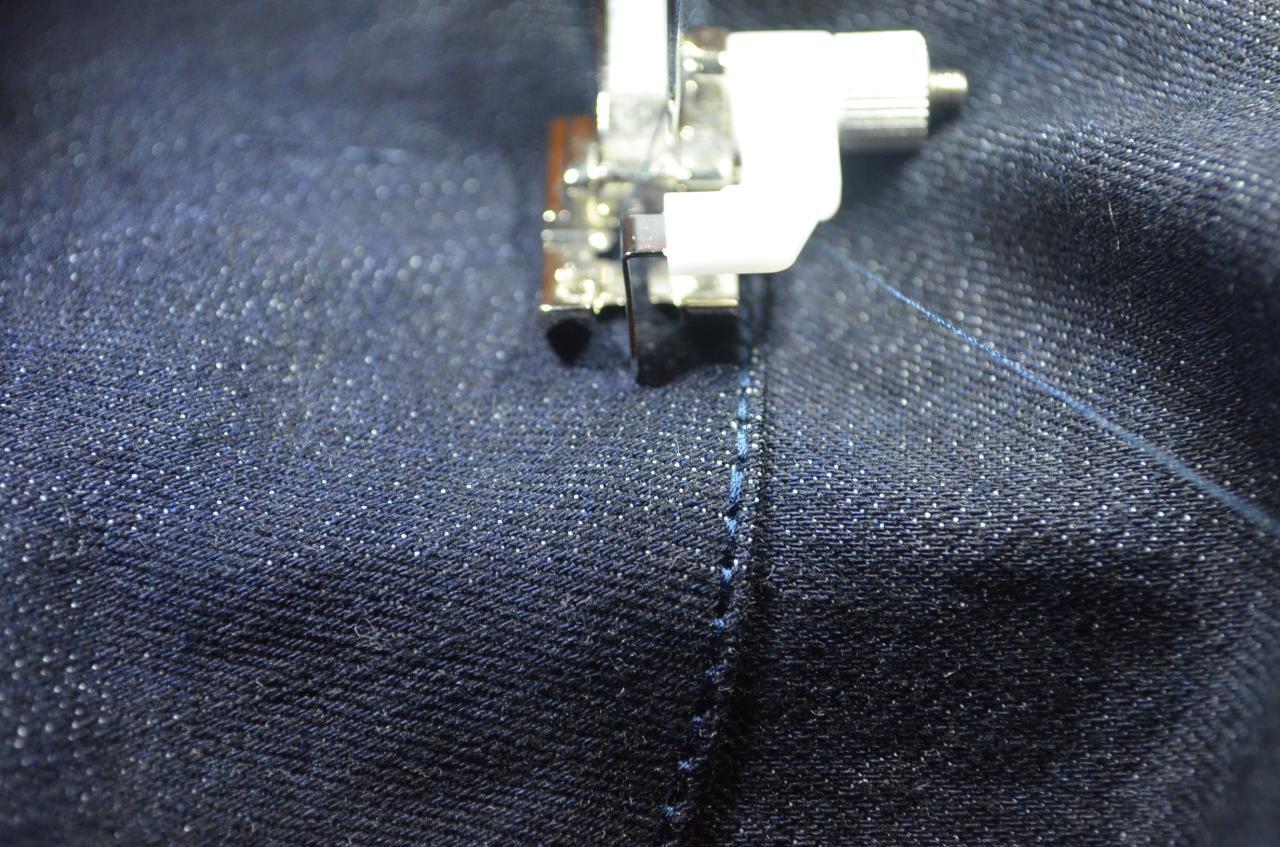
The A-line skirt is a classic and universally flattering garment, characterized by its gradual widening from the waist or hips to the hem, resembling the shape of the letter ‘A’. This silhouette offers a comfortable fit and a timeless aesthetic, making it a popular choice for various occasions and body types. Its inherent simplicity and forgiving nature make it an excellent starting point for those new to the world of sewing.This tutorial will guide you through the process of constructing a simple A-line skirt.
We will cover the fundamental principles of this design, highlight why it’s an ideal project for beginners, and Artikel the essential steps involved. By the end of this section, you will have a clear understanding of what to expect and the resources you’ll need to embark on your sewing journey.
Characteristics of the A-line Skirt Silhouette
The defining feature of an A-line skirt is its silhouette, which is fitted at the waist and gradually flares outwards towards the hem. This gentle widening creates a triangular shape, offering a balanced and modest look. Unlike a pencil skirt, which hugs the hips and legs, or a full circle skirt, which is voluminous, the A-line skirt provides a moderate amount of fullness, allowing for ease of movement without being overly voluminous.
The degree of flare can vary, from a subtle widening to a more pronounced A-shape, depending on the pattern and desired style.
Advantages of the A-line Skirt for Beginner Sewers
The A-line skirt is a highly recommended project for novice sewers due to several key advantages. Firstly, its simple construction involves fewer complex seams and darts compared to more fitted styles, reducing the potential for errors. The forgiving silhouette means that minor inaccuracies in fitting are often less noticeable. Secondly, the cutting of the fabric is straightforward, typically involving straight lines and gentle curves, which are easier to manage with scissors or a rotary cutter.
Finally, the finishing techniques, such as hemming and waistband attachment, are standard sewing procedures that are fundamental to learn, and the A-line skirt provides an excellent platform to practice them.
Overview of A-line Skirt Sewing Steps
Sewing a basic A-line skirt generally involves a series of sequential steps designed to create a well-fitting and neatly finished garment. The process typically begins with preparing your fabric and pattern pieces. This is followed by sewing the main skirt panels together, often at the side seams. Next, a waistband is constructed and attached to the top edge of the skirt.
Finally, the hem is finished, and any closures, such as zippers or buttons, are incorporated. Each step builds upon the last, leading to the completion of the skirt.
Essential Sewing Tools and Materials
To successfully sew your A-line skirt, you will need a specific set of tools and materials. Having these items readily available will ensure a smooth and efficient sewing experience. It is important to gather all your supplies before you begin to avoid interruptions.A comprehensive list of these essentials includes:
- Fabric: The type and amount will depend on your chosen pattern and size. Cotton, linen blends, and lightweight wools are excellent choices for A-line skirts.
- Sewing Pattern: A commercial or self-drafted A-line skirt pattern.
- Sewing Machine: A functional sewing machine with basic stitches.
- Thread: Matching or contrasting thread that is suitable for your fabric type.
- Fabric Scissors: Sharp scissors specifically for cutting fabric.
- Paper Scissors: For cutting pattern pieces.
- Pins: To hold fabric pieces together.
- Measuring Tape: For accurate fabric and body measurements.
- Seam Ripper: An indispensable tool for correcting mistakes.
- Iron and Ironing Board: For pressing seams and achieving a professional finish.
- Marking Tools: Such as tailor’s chalk, fabric pens, or pencils.
- Needles: For hand sewing or machine sewing, appropriate for your fabric.
- Zipper Foot (if using a zipper): A specialized presser foot for sewing zippers.
- Waistband Interfacing (optional): To give structure to the waistband.
Pattern Selection and Preparation
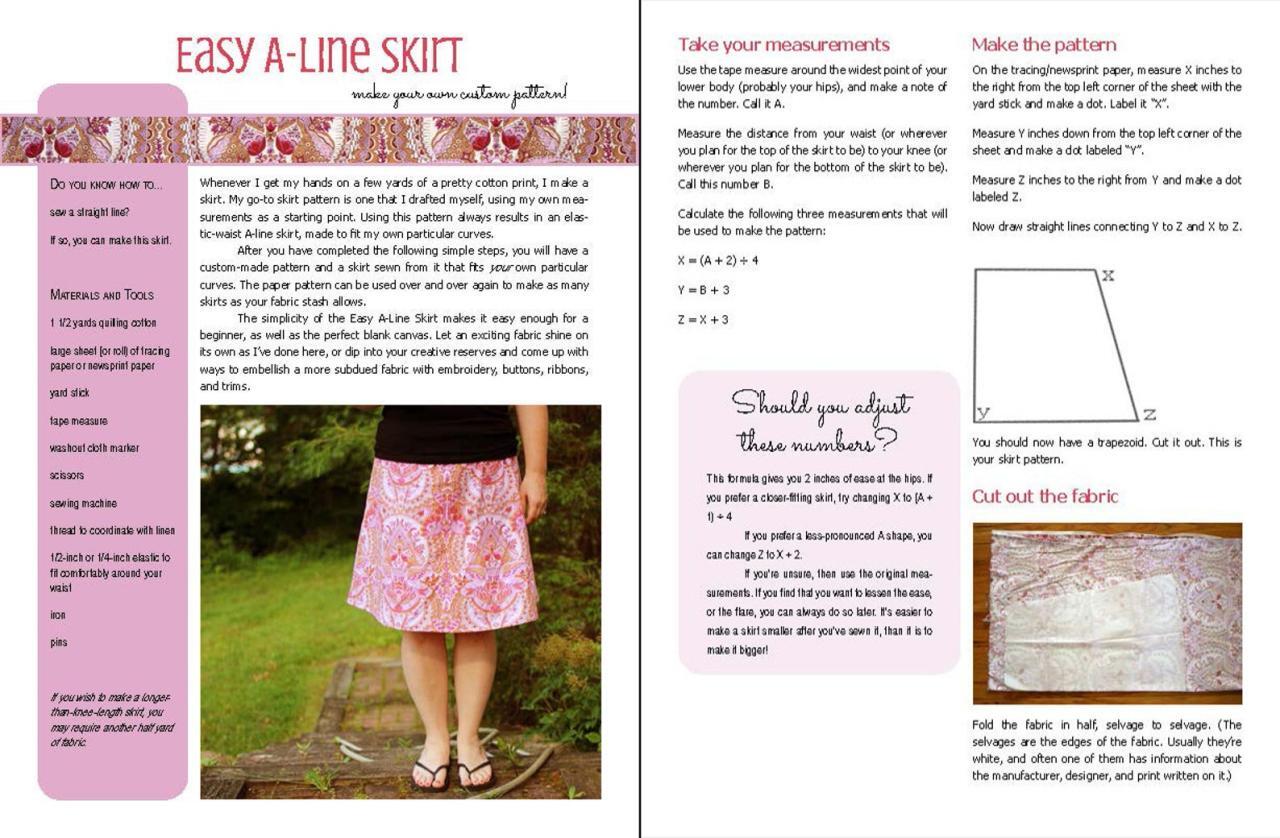
Selecting the right pattern and preparing it correctly are foundational steps for a successful A-line skirt project, especially for beginners. This stage ensures that your finished garment will fit well and that the cutting and sewing processes will be as smooth as possible. We will explore the types of patterns available, how to choose the correct size, understand pattern markings, and prepare the pieces for the next steps.
Beginner-Friendly A-Line Skirt Pattern Types
For those new to sewing, choosing a pattern designed with simplicity in mind is key. These patterns often feature fewer pieces, straightforward seam lines, and clear instructions.
- Basic Skirt Block: This is the most fundamental A-line pattern, typically consisting of a front and back skirt piece. It’s often designed for a standard fit and is an excellent starting point for understanding basic skirt construction.
- Pull-On A-Line Skirt Patterns: These patterns usually incorporate an elastic waistband, eliminating the need for zippers or complex closures. They are exceptionally easy to sew and offer a comfortable, relaxed fit.
- Simple Skirt Patterns with Minimal Seams: Some patterns are designed to minimize the number of seams, often featuring a front and back piece with perhaps side seams. This reduces the complexity of matching seams and curves.
Selecting the Correct Pattern Size
Choosing the right size is paramount for a well-fitting garment. Pattern sizing often differs from ready-to-wear clothing sizes, so relying solely on your dress size can lead to inaccuracies. The most reliable method is to take accurate body measurements.
To select the correct pattern size, you will need a flexible measuring tape. Measure yourself in your undergarments or form-fitting clothing to ensure accuracy. Focus on these key measurements:
- Bust: While not directly used for a skirt, it’s good practice to have this measurement for general reference.
- Waist: Measure around the narrowest part of your natural waist, typically just above your belly button.
- Hips: Measure around the fullest part of your hips and seat, ensuring the tape measure is parallel to the floor.
Once you have your measurements, compare them to the “Body Measurements” or “Size Chart” provided on the pattern envelope. Pattern companies usually indicate which measurement is the primary one for sizing a skirt (often the hip measurement). If your measurements fall between sizes, it’s generally advisable to size up, as it’s easier to take a garment in than to let it out.
“Pattern sizing is based on body measurements, not ready-to-wear sizes. Always measure yourself accurately and compare to the pattern’s size chart.”
Understanding Common Pattern Markings
Pattern pieces are printed with various symbols and lines that provide essential information for cutting and sewing. Familiarizing yourself with these markings will prevent errors and ensure accurate construction.
Key Pattern Markings:
- Grainline: This is a long, straight arrow, usually parallel to the selvage edge of the fabric. It indicates how to place the pattern piece on the fabric to ensure the fabric’s warp threads run parallel to the grainline. Correct grain placement is crucial for the garment’s drape and stability.
- Notches: These are small marks (often triangles or outward-facing lines) that extend from the edge of a pattern piece. They are used to match corresponding pieces together, such as side seams or the front and back of a skirt. Aligning notches ensures that pieces are joined correctly.
- Dots: Small dots are used to mark specific points on the pattern, such as the placement of pockets, darts, or where two pieces of fabric should meet.
- Lengthen/Shorten Lines: These horizontal lines indicate where the pattern piece can be adjusted for height. You can add or subtract length by cutting along these lines and spreading or overlapping the pattern.
- Fold Line: A line with arrows on either end indicates that the pattern piece should be placed on the fold of the fabric. This means you only need to cut one side of the pattern piece, as the fold creates the other half, resulting in a symmetrical piece without a seam.
- Button/Buttonhole Markings: These indicate the placement and size of buttons and buttonholes, if applicable to the pattern.
Preparing Pattern Pieces for Cutting
Before you can cut your fabric, the pattern pieces need to be prepared. This often involves making minor adjustments to ensure a perfect fit.
Pattern Preparation Steps:
- Make Necessary Alterations: Based on your body measurements and any fit concerns, you might need to alter the pattern. Common alterations for A-line skirts include:
- Lengthening or Shortening: Use the lengthen/shorten lines on the pattern pieces. To lengthen, cut along the line and insert a strip of paper or fabric of the desired amount. To shorten, overlap the pattern pieces along the line and tape them together.
- Adjusting Waist or Hip Ease: If the pattern is too tight or too loose at the waist or hips, you can make adjustments by adding or subtracting width at the side seams. For example, to add 1 inch to the hip circumference, add 1/4 inch to each side seam of the front and back pattern pieces.
- Pivoting Darts: If the position of a dart needs to be shifted slightly, you can pivot it by drawing a new dart line and adjusting the pattern accordingly, ensuring the total dart intake remains the same.
- Trace or Cut Out Pattern Pieces: Once alterations are made, you can carefully cut out the pattern pieces from the paper. If you plan to reuse the pattern for multiple projects or different sizes, it’s best to trace the desired size onto tracing paper or pattern paper.
- Press Pattern Pieces: Gently press the paper pattern pieces with a warm iron (avoiding steam, which can distort the paper) to remove any creases. This makes them easier to handle and lay out accurately on the fabric.
Fabric Considerations and Cutting Techniques
Selecting the right fabric is fundamental to achieving a beautiful and well-fitting A-line skirt. The inherent characteristic of an A-line skirt is its gradual widening from the waist to the hem, which is greatly influenced by the fabric’s drape and weight. A fabric with good drape will flow elegantly, while a heavier fabric will hold its shape more rigidly, creating a more pronounced A-line silhouette.
Understanding these properties will guide you in choosing the perfect material for your project.
Suitable Fabric Types for A-Line Skirts
The versatility of the A-line skirt allows it to be made from a wide range of fabrics. The key is to consider how the fabric will behave when cut and sewn, and how it will hang on the body.
- Lightweight Fabrics: These fabrics offer excellent drape and are ideal for softer, more flowing A-line skirts. They are breathable and comfortable for warmer weather. Examples include:
- Chiffon: Extremely lightweight and sheer, creating a very ethereal and flowing skirt. Requires careful handling and often a lining.
- Rayon/Viscose: Known for its beautiful drape, softness, and slight sheen. It can mimic the look of silk but is generally more affordable and easier to work with.
- Linen Blends: Pure linen can be a bit stiff, but blends with rayon or cotton offer a softer hand and better drape while retaining some of linen’s crispness.
- Lightweight Cotton Voile or Lawn: These fine cottons have a slight crispness that still allows for a gentle drape, suitable for a more structured yet airy A-line.
- Medium-Weight Fabrics: These fabrics provide a good balance between structure and drape, making them excellent all-rounders for A-line skirts. They hold their shape well without being too stiff. Examples include:
- Cotton Sateen or Twill: These offer a smooth finish and enough body to create a clear A-line shape. They are durable and easy to care for.
- Denim: A classic choice for a more casual A-line skirt. Its weight provides good structure and durability.
- Gabardine: A tightly woven fabric known for its durability and water-resistant properties, often used for more structured skirts.
- Medium-weight Wool Blends: Offer warmth and a lovely drape, suitable for cooler weather A-line skirts.
- Heavyweight Fabrics: These fabrics create a very structured and dramatic A-line silhouette. They are excellent for skirts that need to stand out and hold their shape firmly. Examples include:
- Broccade or Jacquard: These textured, often patterned fabrics have a significant weight and stiffness that will hold the A-line shape beautifully.
- Corduroy: The wales of corduroy add texture and a certain rigidity, making for a substantial A-line skirt.
- Heavy Canvas or Duck Cloth: These very sturdy fabrics will create a stiff, architectural A-line.
Fabric Pre-Washing and Preparation
Before you begin cutting into your chosen fabric, it is crucial to pre-wash and prepare it. This step is essential for several reasons, primarily to prevent shrinkage and color bleeding after the garment is completed. Different fabric types require slightly different preparation methods, but the general principle remains the same: mimic the care instructions the finished garment will receive.
- Pre-washing:
- Washing: Wash your fabric in the same way you intend to wash the finished skirt (e.g., machine wash on a gentle cycle with cold water, or hand wash). If the fabric is likely to be dry-cleaned, it’s still advisable to pre-wash it in water to account for any potential shrinkage.
- Drying: Dry the fabric according to its care instructions. This might involve tumble drying on low heat, or line drying.
- Ironing: Once dry, press the fabric thoroughly with a hot iron, using steam if appropriate for the fabric type. This will remove any wrinkles and make it easier to lay out and cut accurately.
- Purpose of Pre-washing:
- Shrinkage: Most natural fibers, like cotton and linen, will shrink when washed. Pre-washing ensures that any shrinkage occurs before cutting, so your finished skirt will retain its intended size and fit.
- Colorfastness: Some dyes can bleed, especially in darker or vibrant colors. Pre-washing helps to set the dye and remove excess color, preventing it from bleeding onto other fabrics or onto the wearer’s skin.
- Removing Sizing: Many fabrics are treated with sizing agents to give them a crisp finish for manufacturing and transport. Pre-washing removes these agents, allowing the fabric to drape more naturally.
Fabric Layout and Cutting Techniques
Efficiently laying out your pattern pieces on the fabric and cutting them accurately are critical steps for a successful sewing project. This stage not only ensures that your skirt pieces are the correct size and shape but also helps to minimize fabric waste, which can be particularly important with expensive or specialty fabrics.
Grainline and Nap
Understanding the grainline of your fabric is paramount. The grainline is the direction of the threads woven into the fabric.
- Warp Threads: These run parallel to the selvage (the finished edge of the fabric). This is typically the grainline indicated on pattern pieces. Cutting on the straight grain ensures the fabric hangs correctly and doesn’t twist.
- Weft Threads: These run perpendicular to the selvage.
- Bias: Cutting on the bias means cutting at a 45-degree angle to the warp and weft threads. This creates a stretchier fabric that drapes beautifully, often used for more dramatic A-line skirts or for specific design elements.
Some fabrics, like velvet or corduroy, have a nap – a directional pile or texture. For these fabrics, all pattern pieces must be laid out in the same direction to ensure a consistent appearance. This is often indicated on the pattern envelope or instructions.
Layout Methods
The layout diagram provided with your pattern is your guide. However, some general principles apply:
- Folded Fabric: If the pattern indicates to place a piece on the fold, align the straight grainline of the pattern piece with the fold of the fabric. Ensure the fold is crisp and the fabric is smooth.
- Single Layer Fabric: If pieces are to be cut from a single layer, lay the fabric flat.
- Nap Direction: If your fabric has a nap, ensure all pieces are oriented with the nap running in the same direction. Typically, this means placing the pattern pieces with their grainline arrows pointing towards the bottom hem of the skirt.
- Maximizing Efficiency: Arrange the pattern pieces thoughtfully to fit within the fabric width. Place larger pieces first, then fill in the gaps with smaller pieces. Consider if any pieces can be cut side-by-side if they are the same or if the pattern allows.
Cutting Techniques
Once the pattern pieces are correctly positioned, accurate cutting is essential.
- Pinning: Secure the pattern pieces to the fabric using pins. Place pins within the seam allowance where possible, or on the outside edges if necessary, but avoid placing them where they will interfere with your cutting line.
- Cutting Tools: Use sharp fabric shears or a rotary cutter with a mat. Dull tools can snag the fabric and result in uneven cuts.
- Cutting Line: Follow the cutting lines precisely. If you are using a rotary cutter, lift the fabric slightly and cut in a smooth, continuous motion. If using shears, cut along the edge of the paper pattern piece.
- Notches and Dots: Carefully transfer all notches, dots, and other markings from the pattern to the fabric using tailor’s chalk, a fabric pen, or by clipping small notches into the seam allowance (being careful not to cut into the seam line). These markings are crucial for aligning pieces correctly during sewing.
- Cutting on the Fold: When cutting a piece on the fold, cut only the single layer of fabric that is not on the fold. The fold itself acts as the other edge of the pattern piece.
Assembling the Skirt Panels
With the pattern prepared and fabric cut, the next crucial step is to bring your A-line skirt to life by assembling the individual panels. This section will guide you through the process of sewing the seams, attaching a waistband, and finishing the raw edges for a professional look. We will also explore how to seamlessly integrate pockets into your design.
Sewing the Side Seams
The side seams are the foundational elements that connect the front and back panels of your A-line skirt. Proper sewing of these seams ensures the skirt hangs correctly and maintains its shape.To begin, place the front and back skirt panels right sides together, aligning the side edges carefully. Pin these edges securely to prevent shifting during sewing. Using a straight stitch on your sewing machine, stitch along the pinned edge, maintaining a consistent seam allowance as indicated by your pattern.
A standard seam allowance for skirts is typically 1.5 cm (5/8 inch).After stitching, it is essential to finish the raw edges of the seam allowance to prevent fraying. Several methods can be employed for this:
- Serging: If you have a serger (overlocker), this is the most efficient method for creating a neat and durable finish on both edges simultaneously.
- Zigzag Stitch: A zigzag stitch on your regular sewing machine can be applied along the raw edge of each seam allowance. Ensure the stitch width is wide enough to cover the raw edge completely.
- Pinked Edges: For fabrics that do not fray excessively, you can use pinking shears to cut along the raw edge. This creates a sawtooth pattern that helps to reduce fraying.
- French Seams: This is a more advanced technique that encloses the raw edges within the seam itself, resulting in a very clean finish on the inside. To create a French seam, first sew the seam with the wrong sides together using a small seam allowance (e.g., 0.6 cm or 1/4 inch). Trim this seam allowance to half its width. Then, turn the skirt so the right sides are together and stitch again, enclosing the raw edge with a larger seam allowance (e.g., 1 cm or 3/8 inch).
Creating and Attaching a Waistband
A well-constructed waistband not only secures the skirt at the waist but also contributes significantly to its overall finished appearance. For a simple A-line skirt, a straight waistband is commonly used.To create the waistband, you will typically need two pieces of fabric: the outer waistband and the lining waistband. Cut these pieces according to your pattern, ensuring they are the correct length to encircle your waist with a slight overlap for fastening.
The width of the waistband will depend on your design preference.The process for attaching the waistband generally involves the following steps:
- Prepare the Waistband Pieces: Fold each waistband piece in half lengthwise, right sides together, and stitch the short ends to create a continuous loop. Press the seams open.
- Attach to Skirt: With the skirt right side out and the waistband lining piece also right side out, place the outer waistband piece onto the top edge of the skirt, aligning the raw edges. The right side of the outer waistband should be against the right side of the skirt. Pin securely. Stitch along the top edge of the skirt, using your specified seam allowance.
- Fold and Secure: Turn the waistband up so the seam is at the top. Press the seam allowance towards the waistband. Now, fold the lining waistband piece down, enclosing the raw edge of the skirt seam allowance. You can either hand-stitch the lining waistband to the inside of the skirt for an invisible finish or machine-stitch it in place, creating a topstitch along the bottom edge of the waistband.
- Fastenings: Determine your closure method. This could be a button and buttonhole, a hook and eye, or a zipper that extends into the waistband. Install your chosen fastening according to its specific instructions.
Finishing Raw Edges of Fabric Panels
Neatly finishing the raw edges of your fabric panels before or during assembly is paramount for a professional and durable garment. Unfinished edges can unravel over time, compromising the integrity of your skirt.Before sewing the side seams, consider finishing the raw edges of the skirt panels. This can be done using the same techniques mentioned for finishing seam allowances: serging, zigzag stitching, or pinking.
For panels that will be part of a French seam, the initial raw edge will be enclosed, so a preliminary finish might not be strictly necessary, but it can still provide an extra layer of security.The hem of the skirt also requires a finished edge. Common hemming techniques include:
- Double Fold Hem: Fold the raw edge up by a small amount (e.g., 0.6 cm or 1/4 inch) and press. Then, fold it up again by a larger amount (e.g., 2.5 cm or 1 inch) to enclose the raw edge. Stitch close to the folded edge.
- Rolled Hem: This is a very narrow hem, often used for lightweight fabrics. It can be achieved with a specialized presser foot on your sewing machine or by carefully folding and stitching a very narrow edge.
- Bias Tape Hem: Binding the hem with bias tape offers a decorative and durable finish, particularly suitable for fabrics that are prone to fraying or for creating a contrasting detail.
Incorporating Pockets into Side Seams
Adding pockets to the side seams of an A-line skirt is a practical and stylish enhancement. This method involves creating pocket bags and integrating them into the side seams during the assembly process.Here’s a method for incorporating inseam pockets:
- Prepare Pocket Bags: Cut out two pocket bag pieces for each side of the skirt (so, four pieces in total). These are typically shaped pieces that will form the pocket.
- Mark Pocket Placement: On the right side of your skirt panels, mark the placement and opening of your pockets. This is usually indicated on your pattern.
- Attach Pocket Bags to Front Panels: Place one pocket bag piece right sides together with the corresponding front skirt panel, aligning the pocket opening edge. Stitch along the pocket opening. Repeat for the other front panel and its pocket bag.
- Attach Pocket Bags to Back Panels: Place the remaining pocket bag pieces right sides together with the corresponding back skirt panels, aligning the pocket opening edge. Stitch along the pocket opening.
- Sew Side Seams and Pocket Bags: Now, with the skirt panels right sides together, align the side seams. Stitch the side seams from the hem up to the beginning of the pocket opening. Then, continue stitching along the pocket bag edges, connecting the two pocket bags together at the bottom of the pocket. This creates the pocket pouch. Ensure the pocket opening remains unstitched.
- Finish Pocket Bag Edges: Finish the raw edges of the pocket bags to prevent fraying, using methods like serging or zigzag stitching.
This process effectively creates a pocket that is seamlessly integrated into the side seam of the skirt.
Hemming and Finishing Touches
This section focuses on achieving a polished and professional finish for your A-line skirt, paying particular attention to the hemline. A well-executed hem not only looks neat but also contributes to the overall drape and longevity of your garment. We will explore different hemming techniques suitable for the characteristic flare of an A-line skirt and discuss the crucial role of pressing in creating a crisp, enduring finish.A perfectly straight and even hemline on a curved or flared skirt requires careful attention during the marking and sewing stages.
The natural tendency for fabric to stretch or hang unevenly can be managed with specific techniques. Achieving this precision ensures that the skirt hangs beautifully and avoids any visible distortions.
Hemming Techniques for A-Line Skirts
Various hemming methods can be employed to create a clean and durable finish on an A-line skirt. The choice of technique often depends on the fabric type, the desired aesthetic, and the level of invisibility required.
- Blind Hem: This is an excellent choice for a nearly invisible hem. It involves folding the hem allowance twice and then using a blind hem stitch on your sewing machine or a hand-sewing blind stitch. The stitch catches only a few threads of the main fabric, making it appear as if the hem is magically attached. This technique is particularly effective on lighter to medium-weight fabrics and when a very neat, unobtrusive finish is desired.
- Double-Fold Hem: A classic and versatile hemming method, the double-fold hem provides a sturdy and clean edge. It involves folding the hem allowance up by a small amount (e.g., 1/4 inch) and pressing, then folding it up again by the desired hem width (e.g., 1 inch or more) and pressing. This creates a neat double fold that encloses the raw edge.
It’s suitable for a wide range of fabrics and offers good durability.
- Rolled Hem: Often used on lightweight and delicate fabrics like silk or chiffon, a rolled hem creates a very narrow, delicate edge. This can be achieved with a specialized rolled hem foot on a sewing machine or by carefully hand-rolling and stitching. While beautiful, it requires precision and may not be the most durable option for heavier fabrics or skirts that will see extensive wear.
Achieving a Straight and Even Hemline
Ensuring your hemline is perfectly straight and even on a curved or flared skirt is paramount for a professional appearance. This process involves accurate measurement and careful manipulation of the fabric.
To begin, hang the skirt on a dress form or a hanger for at least 24 hours to allow the fabric to settle completely. This step is crucial as gravity can cause uneven stretching or hanging, especially in fabrics with a bias cut or significant drape. Once settled, use a measuring tape and tailor’s chalk or pins to mark the desired hemline.
For a perfectly even hem on a curved skirt, it is often best to mark from the floor upwards. A hem gauge or a commercial hem marker can be invaluable tools for ensuring consistent distance from the floor all around the skirt.
Alternatively, if using a dress form, you can use a long ruler or a yardstick held perpendicular to the floor and pivot it around the form to mark a consistent distance from the floor. For a very precise mark, consider using a chalk-line dispenser designed for sewing. When marking, take small, incremental measurements and ensure the fabric is hanging naturally without being stretched or pulled.
Pressing Seams and the Hem
Pressing is an indispensable step in garment construction, transforming raw fabric into a beautifully shaped and finished garment. For an A-line skirt, proper pressing of both the seams and the hem contributes significantly to its professional look and structure.
After sewing each seam, it’s essential to press it open or to one side as directed by your pattern. Pressing seams not only flattens them but also removes any puckering or distortion, allowing the fabric to lie smoothly. Use the appropriate heat setting for your fabric and, if necessary, a pressing cloth to protect delicate materials. For A-line skirts, pressing the seams towards the back often helps to reduce bulk and create a cleaner silhouette.
When it comes to the hem, pressing is just as critical. After you have marked and sewn your hem, press it thoroughly. For a double-fold hem, press the first fold, then the second fold. This initial pressing sets the shape of the hem and makes the subsequent stitching much easier and more accurate. After the hem is stitched, a final press from the right side of the fabric will ensure it lies flat and crisp.
Use a pressing cloth to avoid any shine marks on the fabric, especially with darker or synthetic materials. A tailor’s ham or sleeve board can be useful for pressing curved areas of the hem, allowing the fabric to conform to the shape without flattening it out.
“Pressing is not just about removing wrinkles; it’s about shaping the fabric and giving your garment structure and a professional finish.”
Final Checks for a Well-Constructed Skirt
Before considering your A-line skirt complete, a thorough final inspection is necessary to ensure it meets a high standard of construction and presents well. These checks cover various aspects of the garment’s integrity and appearance.
Conducting a series of final checks will help identify any overlooked issues and guarantee a polished final product. This stage is about attention to detail and ensuring that all elements of the skirt are as they should be.
- Hemline Evenness: Stand back and view the skirt from all angles to confirm the hemline is perfectly straight and even. Check for any dips or rises in the fabric.
- Stitch Quality: Examine all visible stitching, including seams and the hem. Ensure stitches are consistent, even, and securely fastened. There should be no skipped stitches, loose threads, or puckering.
- Seam Integrity: Gently pull on the seams to ensure they are strong and secure. Check that raw edges within the seam allowances are properly finished (e.g., serged or zigzagged) to prevent fraying.
- Zipper/Closure Check: If your skirt has a zipper or other closure, test its functionality. Ensure it zips smoothly without catching and that it is securely attached.
- Overall Drape and Fit: Try on the skirt to assess its overall drape and fit. The skirt should hang smoothly and evenly without pulling or bunching in any areas.
- Pressing Perfection: Give the entire skirt a final, light press to ensure all creases are sharp and the fabric is smooth. Pay attention to the waistband and any other structural elements.
- Thread Ends: Trim any loose thread ends that may be visible on the inside or outside of the garment.
Understanding Measurement and Pattern Adjustments
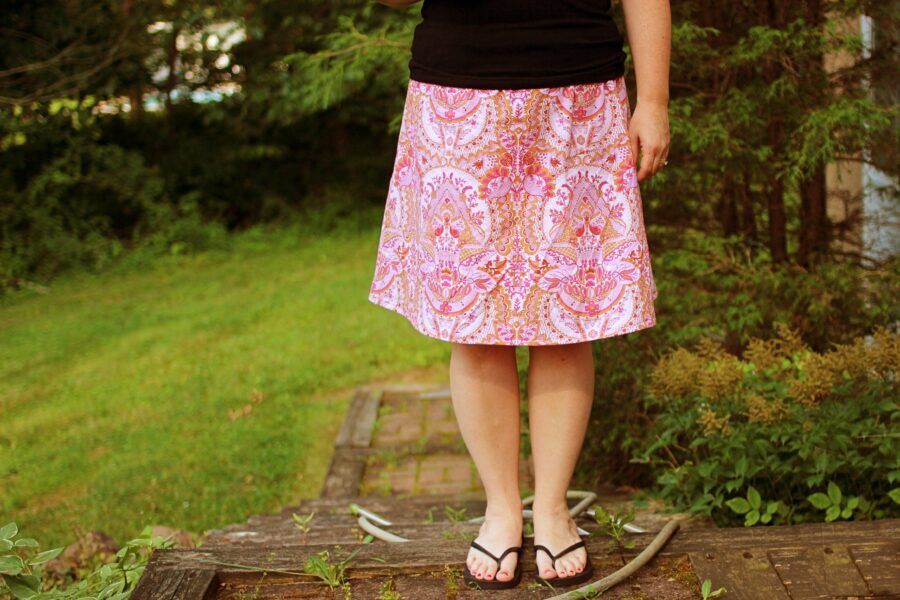
Accurate measurements are the cornerstone of successful garment construction, ensuring your A-line skirt fits beautifully and comfortably. This section will guide you through taking precise body measurements and addressing common fitting challenges with your pattern. Understanding how to adjust pattern pieces will empower you to create a skirt that is perfectly tailored to your unique shape.Taking accurate body measurements is crucial for selecting the correct pattern size and making necessary adjustments.
These measurements serve as the foundation for a well-fitting garment.
Accurate Body Measurements for Skirt Construction
To ensure your A-line skirt fits perfectly, it is essential to take precise body measurements. These measurements will guide your pattern selection and any necessary alterations. For skirt construction, the key measurements are waist circumference, hip circumference, and desired skirt length.To take these measurements accurately:
- Waist Circumference: Locate your natural waistline, which is typically the narrowest part of your torso, usually just above your belly button. Wrap the measuring tape around this point, keeping the tape parallel to the floor and snug but not tight.
- Hip Circumference: Measure around the fullest part of your hips and buttocks. Ensure the tape measure is parallel to the floor and not digging into your skin.
- Skirt Length: Decide where you want the hem of your skirt to fall. Measure from your natural waistline down to that desired point. This can be done while standing naturally.
Common Pattern Fitting Issues and Their Solutions for A-Line Skirts
Even with accurate measurements, sometimes a pattern may require adjustments to achieve an ideal fit. Understanding common fitting issues and their solutions will help you create a polished and comfortable skirt.Common fitting issues for A-line skirts include:
- Gapping at the Waistband: This often occurs if the waist measurement is larger than the body’s natural curve, or if the pattern is too straight. To fix this, you can introduce a small dart or pleat at the back of the waistband, or subtly taper the waistband to better match your waist.
- Tightness or Pulling Across the Hips: If the hip measurement is too snug, the skirt will feel restrictive. This can be resolved by adding width to the side seams of the skirt panels, typically by increasing the seam allowance or by making a full or partial sway-back adjustment if the issue is due to posture.
- Uneven Hemline: This can be caused by variations in leg length or how the skirt hangs on the body. To correct an uneven hem, hang the skirt on your body and mark the desired hemline evenly all around, or use a skirt hem marker.
- Skirts Too Long or Too Short: This is a direct result of the initial skirt length measurement not matching the pattern’s drafted length. Adjustments are straightforward and involve altering the pattern pieces before cutting.
Guide for Adjusting Pattern Pieces for Length and Width
Pattern adjustments are a standard part of sewing, allowing you to customize a commercial pattern to your specific body. For an A-line skirt, adjustments for length and width are most common.
Length Adjustments
To adjust the length of your A-line skirt pattern pieces:
- Determine the Amount of Adjustment: Measure the difference between your desired skirt length and the length indicated on the pattern.
- Add or Remove Length:
- To lengthen: Draw a horizontal line across the pattern piece at the desired adjustment point (usually mid-thigh or calf). Cut along this line and insert a strip of paper, spreading it open by the amount you need to lengthen. Redraw the side seams and hemline to be perpendicular to the grainline.
- To shorten: Draw a horizontal line across the pattern piece. Fold the pattern piece along this line, creasing it to remove the excess length. Ensure the fold is smooth and the grainline remains parallel.
- Important Note: Always make length adjustments below the hip line to avoid distorting the hip curve.
Width Adjustments
To adjust the width of your A-line skirt pattern pieces, primarily at the side seams:
- Determine the Amount of Adjustment: Calculate the difference between your body measurement and the pattern’s corresponding measurement, divided by the number of seams where you will make the adjustment (usually two side seams).
- Add or Remove Width:
- To widen: Draw a vertical line parallel to the side seam from the hem up to the waist. Add the desired amount of width to this line. Ensure the grainline remains parallel.
- To narrow: Draw a vertical line parallel to the side seam. Fold the pattern piece inward along this line, reducing the width.
- Consider Ease: Remember to account for wearing ease when adjusting width. The pattern already includes ease, so adding too much can make the skirt too loose.
Measurement System Comparison for Pattern Adaptation
When working with patterns, especially if they are from different regions or if you prefer to use a specific measurement system, understanding the conversion between inches and centimeters is essential. This table provides a reference for common measurements used in skirt construction.
| Measurement | Standard Measurement | Adjustment for Skirt | Conversion Factor (Approximate) |
|---|---|---|---|
| Waist Circumference | Measure around the natural waistline. | Add or subtract ease as per pattern instructions. | 1 inch = 2.54 cm |
| Hip Circumference | Measure around the fullest part of the hips. | Ensure sufficient ease for comfortable movement. | 1 inch = 2.54 cm |
| Skirt Length | Measure from the natural waist to the desired hemline. | Adjust pattern piece length accordingly. | 1 inch = 2.54 cm |
| Pattern Measurement | Often provided in inches or cm on the pattern envelope. | Compare your body measurements to the pattern’s finished garment measurements. | 1 cm = 0.394 inches |
By carefully taking your measurements and understanding how to adjust your pattern, you can confidently create an A-line skirt that is both stylish and perfectly fitted to you.
Sewing Machine Techniques for Skirt Construction
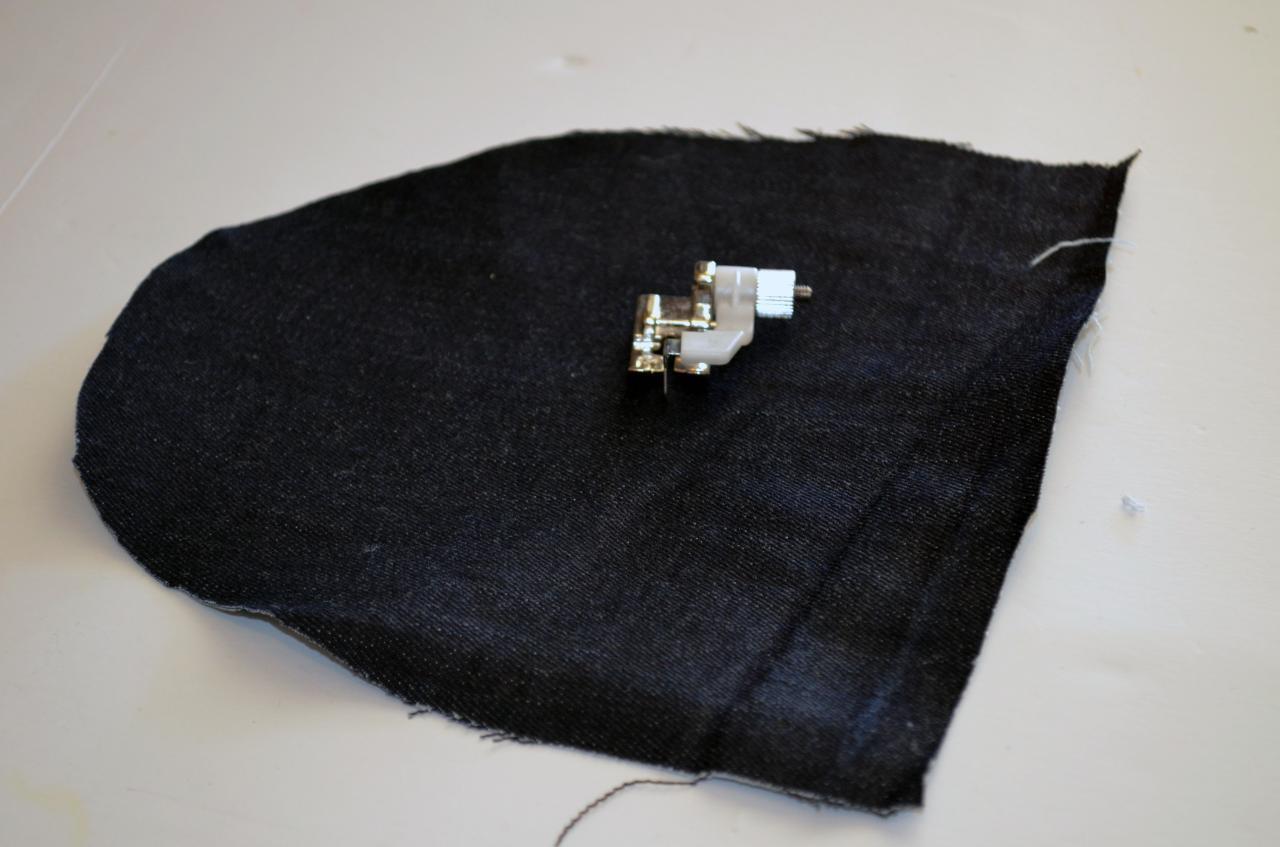
Mastering your sewing machine is key to creating a professional-looking A-line skirt. This section will guide you through the essential techniques and settings to ensure your skirt is constructed with precision and durability. We will explore the functions of various stitches, how to prepare your machine for different fabrics, and tips for achieving smooth finishes on curves and corners.
Sewing Machine Stitches for Skirt Construction
Different stitches serve specific purposes in garment construction, providing both strength and aesthetic appeal. Understanding when to use each stitch will significantly enhance the quality of your A-line skirt.
- Straight Stitch: This is the most fundamental stitch, used for most seams that do not require stretching. For skirt construction, it’s ideal for joining the side seams, attaching the waistband, and hemming. Ensure your stitch length is appropriate for your fabric; typically, 2.0-2.5mm is suitable for most apparel fabrics.
- Zigzag Stitch: The zigzag stitch is versatile and crucial for finishing raw edges to prevent fraying. It can also be used for sewing stretchy fabrics, as it allows for some give. For skirt construction, a narrow to medium width zigzag (1.5-3.0mm) is often used along seam allowances. A wider zigzag can also be used for decorative purposes or to secure buttonholes.
- Backstitch: Essential for reinforcing the beginning and end of any seam. This is typically achieved by sewing forward a few stitches, then reversing for a few stitches, and then continuing forward. This prevents seams from unraveling during wear and washing.
Setting Up the Sewing Machine for Various Fabric Types and Seam Constructions
Proper machine setup ensures that your stitches are consistent and that your fabric feeds smoothly, preventing skipped stitches or puckering. This involves selecting the correct needle, thread, and tension.
When preparing your sewing machine, consider the weight and weave of your fabric. A general guideline is to use a finer needle for lighter fabrics and a heavier needle for thicker materials. Similarly, thread weight should correspond to fabric weight.
| Fabric Type | Recommended Needle Type | Recommended Needle Size | Recommended Thread | Tension Setting (General) |
|---|---|---|---|---|
| Lightweight Cotton/Linen | Universal | 70/10 or 80/12 | All-purpose polyester | 3-5 |
| Medium-weight Cotton/Denim | Universal or Jeans | 80/12 or 90/14 | All-purpose polyester | 4-6 |
| Stretchy Knits | Ballpoint or Jersey | 70/10 or 80/12 | Stretch polyester | 3-5 |
| Silk/Rayon | Microtex or Fine Universal | 60/8 or 70/10 | Fine polyester or silk thread | 2-4 |
Always perform a test stitch on a scrap of your fabric before starting on the actual skirt. Adjust the tension as needed; if stitches are looping on the underside, increase top tension. If stitches are looping on the top side, increase bobbin tension (or decrease top tension).
Sewing Smooth Curves and Corners on the A-Line Skirt
Achieving neat curves and sharp corners requires careful handling of the fabric and precise machine control. The A-line skirt typically features gentle curves at the hem and potentially at the side seams depending on the pattern.
For sewing smooth curves, such as the hem of your A-line skirt, it is beneficial to sew at a slightly slower speed. As you approach the curve, guide the fabric gently with your hands, allowing the machine to feed it. Avoid pulling or pushing the fabric, as this can distort the curve. When sewing a corner, such as at the end of a waistband attachment or a pocket, pivot the fabric by leaving the needle down in the fabric, lifting the presser foot, turning the fabric to the desired angle, lowering the presser foot, and then continuing to sew.
A useful technique for navigating curves is to use the presser foot as a guide. For instance, when hemming, you might align the folded edge of the hem with the edge of the presser foot. For sharper corners, sewing right up to the corner point, pivoting with the needle down, and then continuing will create a crisp finish.
Troubleshooting Common Sewing Machine Problems During Skirt Construction
Even with careful setup, sewing machine issues can arise. Knowing how to identify and resolve common problems will save you time and frustration.
When encountering issues, it’s always best to stop sewing immediately to prevent further damage to your fabric or machine. Here is a procedure for troubleshooting common problems:
- Skipped Stitches:
- Check that the needle is correctly inserted and not bent or dull. Replace if necessary.
- Ensure you are using the correct needle type and size for your fabric.
- Verify that the thread is not tangled in the bobbin area or lint build-up is not obstructing the bobbin case.
- Check the thread tension – it might be too loose.
- Thread Breaking:
- The needle might be too fine for the thread or fabric, or it could be bent.
- Ensure the thread is correctly threaded through all guides and the tension discs.
- Check for burrs or rough spots on the needle plate or bobbin case.
- The thread itself might be faulty or old.
- Fabric Puckering:
- The top tension is likely too tight, or the bobbin tension is too loose. Adjust accordingly.
- The stitch length might be too short for the fabric.
- You may be pulling or pushing the fabric as you sew. Let the machine feed the fabric naturally.
- Using a walking foot can help with feeding multiple layers or slippery fabrics evenly.
- Uneven Stitches:
- Check thread tension.
- Ensure the bobbin is wound evenly and inserted correctly.
- Clean lint and debris from the bobbin area and feed dogs.
- The needle may need replacing.
If problems persist after these checks, consult your sewing machine’s manual or seek assistance from a qualified sewing machine technician.
Adding a Closure to the A-Line Skirt
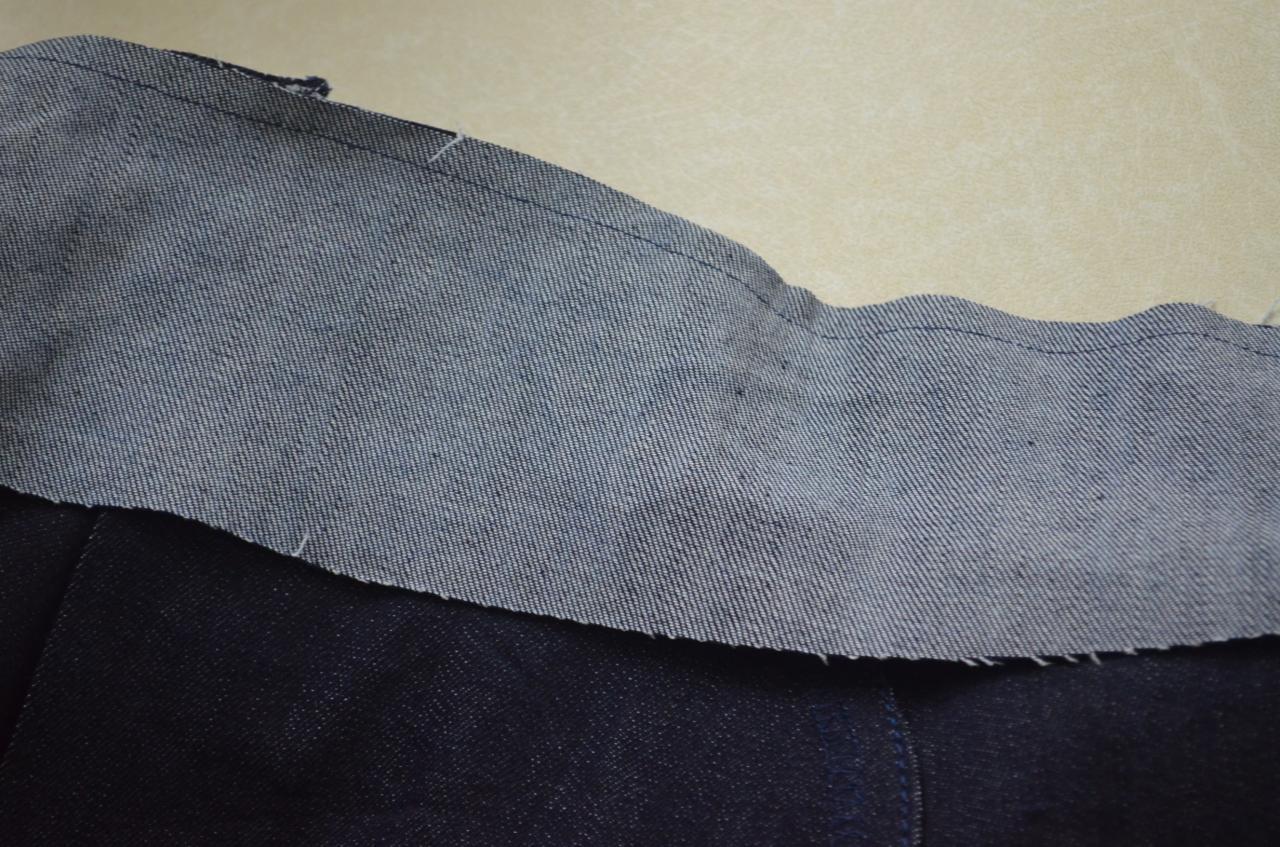
The closure is a crucial element that allows you to put on and take off your skirt comfortably and ensures a proper fit. For an A-line skirt, several closure options can be employed, each offering a different aesthetic and level of functionality. The choice often depends on the fabric, the desired style, and your sewing skill level.Selecting the right closure will not only impact the wearability of your skirt but also contribute significantly to its overall professional finish.
We will explore the most common and effective closure types for A-line skirts, focusing on practical methods for their installation.
Closure Options for A-Line Skirts
A variety of closures are well-suited for A-line skirts, offering different functional and aesthetic qualities. Each type has its own advantages, from the seamless look of an invisible zipper to the classic appeal of buttons.Here are some popular closure types:
- Invisible Zipper: This is a very popular choice for A-line skirts as it lies flat and is virtually undetectable, creating a smooth and continuous line. It’s ideal for a polished and modern look.
- Visible Zipper: While less common for A-line skirts, a visible zipper can be used as a design feature, especially with chunky or decorative zippers, adding an edgy or retro feel.
- Buttons and Buttonholes: A classic and versatile option, buttons can range from small and discreet to large and statement-making. They offer a traditional and often elegant closure.
- Hook and Eye: Typically used in conjunction with a zipper or at the top of a button closure for extra security, hook and eye fasteners are small and unobtrusive.
- Elastic Waistband: For a more casual and comfortable skirt, an elastic waistband is an excellent choice. It provides ease of wear and is particularly suitable for knit fabrics or when a defined waistband isn’t desired.
Inserting an Invisible Zipper
The invisible zipper is a sophisticated closure that offers a clean, seamless finish. Its installation requires precision, but with careful attention to detail, you can achieve professional results. This method involves pre-pressing and careful stitching to ensure the zipper teeth are hidden.Here’s a step-by-step guide to inserting an invisible zipper:
- Prepare the Zipper: Gently press the zipper tape flat with an iron, away from the teeth. This helps to relax the tape and make it easier to stitch.
- Pin the Zipper: Place the skirt pieces right sides together, aligning the seam where the zipper will be inserted. Lay the invisible zipper face down on top of the seam allowance, with the zipper teeth aligned with the seam line. The right side of the zipper tape should be against the right side of the fabric. Pin the zipper tape securely to the seam allowance on both sides.
- Stitch the Zipper: Using an invisible zipper foot on your sewing machine, stitch along the edge of the zipper teeth, catching the zipper tape and the seam allowance. Stitch as close to the teeth as possible without actually sewing over them. Start at the top of the zipper and work your way down. Repeat for the other side of the skirt.
- Open and Press: Carefully open the skirt, exposing the zipper. Press the seam allowance away from the zipper teeth.
- Close the Skirt: Once the zipper is sewn in, you will close the remainder of the skirt seam below the zipper. With the zipper partially unzipped, place the skirt right sides together, aligning the remaining raw edges of the seam. Stitch this seam from the bottom edge of the skirt up to the bottom of the zipper stitching, ensuring you do not catch the zipper tape in this stitch.
- Finish the Top: Fold the top edge of the zipper tape over to the inside of the skirt and secure it with a few hand stitches or by topstitching close to the folded edge.
The key to a successful invisible zipper is to stitch as close to the teeth as possible, using a specialized foot to guide the fabric.
Creating Neat Buttonholes and Attaching Buttons
Buttons provide a classic and adjustable closure for A-line skirts. Creating neat buttonholes is essential for a professional look, and securely attaching the buttons ensures durability. The placement and size of your buttonholes should correspond to the size of your buttons.Here’s how to create neat buttonholes and attach buttons:
Creating Buttonholes
- Mark Buttonhole Placement: Determine the placement of your buttonholes along the overlapped edge of the skirt opening. Mark the start and end points of each buttonhole using a fabric marker or chalk. Ensure even spacing.
- Set Up Your Machine: Select your sewing machine’s buttonhole setting. Most machines have an automatic or semi-automatic function. Refer to your sewing machine manual for specific instructions.
- Stitch the Buttonhole: Place the fabric under the buttonhole foot, aligning the marking with the needle. Stitch the buttonhole according to your machine’s instructions. This typically involves stitching a box shape with reinforced ends.
- Cut the Buttonhole: Carefully use a seam ripper to cut open the buttonhole. Insert the tip of the seam ripper into the center of the buttonhole and gently cut along the stitch line. Be cautious not to cut through the end stitches.
Attaching Buttons
- Position the Button: With the skirt closed, position the button on the underlap where it will align with the buttonhole. You can use a pin to hold it in place temporarily.
- Thread Your Needle: Thread a strong needle with a double strand of strong thread that matches your fabric or buttons.
- Stitch the Button: Insert the needle from the wrong side of the fabric up through one of the buttonholes. Pass the needle through the corresponding buttonhole on the button and back down through the fabric. Repeat this several times for each buttonhole to create a secure attachment.
- Create a Shank: To allow space for the fabric of the buttonhole to sit comfortably, create a shank. After stitching through the button a few times, place a toothpick or a small piece of scrap fabric on top of the button. Continue stitching over the toothpick/scrap fabric. This builds up thread between the button and the fabric.
- Secure the Thread: Once the button is firmly attached, remove the toothpick/scrap fabric. Wrap the thread tightly around the stitches under the button several times to form a strong shank. Tie off the thread securely on the wrong side of the fabric.
Incorporating an Elastic Waistband
An elastic waistband offers a simple, comfortable, and quick closure, making it ideal for casual skirts or for sewers who prefer a less intricate method. This approach bypasses the need for zippers or button closures, providing a pull-on style.Here’s a method for incorporating an elastic waistband:
- Prepare the Waistband Area: Fold down the top edge of the skirt to create a casing for the elastic. The width of the fold should be slightly wider than your elastic. Press this fold firmly.
- Fold Again: Fold down the edge again, creating a channel or casing. The second fold should be just wide enough for your elastic to pass through easily. Press this fold as well.
- Stitch the Casing: Stitch along the lower folded edge of the casing, close to the raw edge of the fabric. Leave a small opening of about 2-3 inches to insert the elastic.
- Prepare the Elastic: Cut a piece of elastic to the desired length. You can measure your waist and subtract about 1-2 inches for a snug but comfortable fit, or refer to pattern recommendations.
- Insert the Elastic: Attach a safety pin to one end of the elastic. Thread the safety pin and elastic through the casing, using the opening you left.
- Secure the Elastic: Once the elastic is fully threaded through the casing, overlap the ends by about 1 inch and stitch them together securely with a zigzag stitch.
- Close the Casing: Stitch the opening in the casing closed, ensuring you don’t catch the elastic.
- Distribute the Elastic: Gently pull and smooth the fabric to distribute the elastic evenly within the casing.
An elastic waistband provides excellent comfort and ease of wear, making it a practical choice for many skirt designs.
Visualizing the A-Line Skirt Construction Process
As we progress through the steps of creating your simple A-line skirt, it’s helpful to visualize how each component comes together. Understanding the shapes and how they align will make the sewing process more intuitive and enjoyable. This section will guide you through the visual transformation of your fabric from individual pieces to a beautifully constructed skirt.By picturing the outcome of each stage, you can anticipate the next steps and ensure accuracy in your work.
This visualization aids in troubleshooting potential issues and appreciating the craftsmanship involved in garment construction.
Fabric Pieces After Cutting
Once you have carefully followed your pattern and cut your fabric, the individual pieces will reveal their intended shapes, designed to create the characteristic silhouette of an A-line skirt. The front and back panels will typically share a similar trapezoidal form, wider at the hem than at the waist.
- Skirt Front and Back Panels: These pieces are usually cut on the fold or as two separate pieces. They will exhibit a gentle outward flare from the waist to the hem. The straight edge at the top represents the waistline, and the bottom edge will be the raw hemline, ready for its final treatment. The side edges are where the skirt will be joined together.
- Waistband Piece: This will be a long, rectangular strip of fabric, its length determined by your waist measurement plus seam allowances, and its width calculated based on the desired waistband height and any interlining.
- Zipper Facing or Placket Pieces: Depending on your chosen closure method, you may have smaller, often rectangular or shaped pieces to reinforce the zipper opening.
The Curved Hemline
The A-line skirt is defined by its gradual widening, which naturally creates a curved hemline. This curve is a key visual element that distinguishes it from a straight or pencil skirt.
- Before Hemming: The raw hemline will appear as a smooth, continuous arc. It’s crucial to measure and mark this curve accurately to ensure an even hem. You might notice a slight dip in the fabric at the side seams compared to the center front and back, a natural consequence of the skirt’s flare.
- After Hemming: Once the hem is turned and stitched, this arc will be neatly enclosed. The finished hem will lie smoothly and evenly, maintaining the skirt’s graceful outward flow. A properly executed hem will look seamless, with the stitching line following the original curve precisely.
Joining the Side Seams
The side seams are where the flat fabric pieces are brought together to create the three-dimensional shape of the skirt. This is where the A-line silhouette truly begins to take form.
The alignment of the side seams is critical for achieving a balanced and symmetrical A-line skirt.
When you place the skirt front and back pieces right sides together, the side edges will align perfectly from the waist to the hem. As you sew along this edge, the fabric will gradually shift outwards, creating the characteristic flare. The seam allowance will form a small, neat line on the inside of the skirt, contributing to its structure and ensuring the panels remain securely joined.
Finished vs. Unfinished Waistband
The waistband is the finishing element that connects the skirt body to your waist, and its appearance significantly impacts the overall professional look of the garment.
- Unfinished Waistband: Before the waistband is attached, the top edge of the skirt body will appear as a raw, often zig-zagged or serged edge. The separate waistband piece, if prepared with interfacing, will feel more structured.
- Finished Waistband: Once attached, the waistband will create a clean, defined line at the top of the skirt. It will sit smoothly against the skirt body, with the raw edges of both the skirt and the waistband neatly enclosed within the waistband’s construction. The exterior will present a crisp band, and the interior will reveal the stitching that secures it, often with an under-stitch or top-stitch for added neatness and stability.
Final Summary
As we conclude our exploration of “How to Sew a Simple A-Line Skirt,” you are now well-equipped to create this versatile and flattering garment with confidence. From understanding the flattering A-line shape to mastering the techniques for a professional finish, this guide has provided a clear path to a successful sewing project. We hope you feel inspired and empowered to create your own beautiful A-line skirts, enjoying the rewarding process of bringing your sewing visions to reality.