Embark on a delightful journey into the world of sewing with stretchy knit fabrics, where understanding their unique behavior is the key to unlocking beautiful and comfortable garments. This comprehensive guide is designed to transform potential challenges into exciting opportunities, ensuring your projects are not only successful but also a joy to create.
We will delve into the distinct characteristics of various knit types, from the ever-popular jersey to the cozy French terry, and equip you with the essential tools and preparation techniques necessary for working with these dynamic materials. Get ready to master the art of cutting, sewing, and finishing knits with confidence and precision.
Understanding Stretchy Knit Fabrics
Sewing with stretchy knit fabrics presents a unique and rewarding experience compared to traditional woven materials. Their inherent elasticity and drape offer a different set of characteristics that influence both the sewing process and the final garment’s comfort and fit. Understanding these properties is the first crucial step to successfully creating beautiful and well-fitting knit projects.Unlike woven fabrics, which are constructed by interlacing warp and weft threads at right angles, knit fabrics are created by interlocking loops of yarn.
This looping structure is what gives knits their characteristic stretch and recovery. This fundamental difference in construction leads to a variety of distinct properties that are essential to grasp when embarking on knit sewing projects.
Knit Fabric Properties Compared to Woven Fabrics
The primary distinction between knit and woven fabrics lies in their elasticity. Woven fabrics have limited stretch, primarily along the bias (diagonal). In contrast, knit fabrics possess significant stretch in at least one direction, and often in both the lengthwise and crosswise directions, thanks to their looped construction. This stretch allows knit garments to conform to the body, providing ease of movement and a comfortable fit.
Furthermore, knit fabrics tend to drape more fluidly than many wovens, creating soft, flowing silhouettes. Wovens, on the other hand, often hold their shape more rigidly, making them suitable for structured garments.
Common Stretchy Knit Fabric Types and Their Characteristics
A variety of knit fabrics are popular for garment construction, each with its own unique feel and application. Understanding their specific attributes will help you select the right fabric for your project.
- Jersey Knit: This is perhaps the most common type of knit fabric. It has a smooth, flat face and a slightly ribbed back. Jersey has good stretch, typically in the crosswise direction, and drapes well. It’s ideal for t-shirts, dresses, leggings, and loungewear.
- Interlock Knit: A double-knit fabric, interlock appears the same on both sides and is thicker and more stable than jersey. It has less curl at the edges and is less prone to runs. Interlock offers good stretch and recovery and is excellent for children’s wear, activewear, and more structured knit tops.
- Rib Knit: Characterized by vertical ribs, rib knit fabrics have excellent stretch and recovery, making them very elastic. They are often used for cuffs, neckbands, and waistbands, but can also be used for entire garments like fitted tops and dresses.
- French Terry: This knit fabric has a smooth face and looped or terry-like texture on the back. It offers moderate stretch and a soft, comfortable feel. French terry is a popular choice for sweatshirts, hoodies, casual pants, and activewear.
- Ponte de Roma: A stable, double-knit fabric, Ponte de Roma has a smooth finish and excellent drape. It offers good stretch and recovery, making it a versatile choice for dresses, skirts, trousers, and jackets that require a bit more structure than jersey.
Advantages and Challenges of Working with Stretchy Knit Fabrics
Working with knit fabrics offers distinct benefits but also presents certain challenges that require specific techniques.
Advantages:
- Comfort and Fit: The inherent stretch of knits allows for garments that are incredibly comfortable to wear and provide a flattering, body-hugging fit without feeling restrictive.
- Ease of Movement: For activewear, athleisure, and children’s clothing, the stretch is paramount, allowing for unrestricted movement.
- Versatility: Knit fabrics can be used to create a wide range of garments, from casual t-shirts and loungewear to more structured dresses and even light jackets.
- Less Fraying: Because of their looped construction, knit fabrics generally do not fray as much as woven fabrics when cut, which can simplify some finishing techniques.
Challenges:
- Stretching and Curling: Knit fabrics can stretch out of shape easily during cutting and sewing, and the edges often curl, making them difficult to handle.
- Need for Specialized Needles and Threads: Standard sewing machine needles can snag or skip stitches on knits. Using ballpoint or stretch needles is essential to prevent damage to the fabric and ensure secure stitches.
- Seam Puckering: If the tension or stitch length is not adjusted correctly, seams on knit fabrics can pucker.
- Cutting Accuracy: The tendency for knits to shift requires careful cutting techniques to ensure pieces are cut accurately and without distortion.
Essential Tools and Notions for Sewing Knits
To overcome the challenges and fully leverage the benefits of sewing with knits, specific tools and notions are highly recommended. These items will significantly improve your sewing experience and the quality of your finished projects.
Sewing Machine Accessories:
- Ballpoint or Stretch Needles: These needles have a rounded tip that pushes the fabric threads aside rather than piercing them, preventing skipped stitches and fabric damage.
- Walking Foot: A walking foot feeds the top and bottom layers of fabric simultaneously, preventing the layers from shifting and stretching unevenly, which is crucial for knits.
- Overlocker/Serger: While not strictly essential for all knit projects, an overlocker provides professional-looking, durable, and flexible seams that are ideal for knits. It trims, stitches, and finishes the seam in one pass.
Cutting and Measuring Tools:
- Rotary Cutter and Mat: These tools allow for precise cutting without disturbing the fabric as much as scissors might. Ensure your mat is clean to avoid snagging.
- Pattern Weights: Using pattern weights instead of pins helps to keep the fabric flat and prevent distortion while cutting.
- Sharp Scissors: If using scissors, ensure they are very sharp to make clean cuts without snagging or stretching the fabric.
Threads and Stabilizers:
- Stretch Thread or Polyester Thread: Use a good quality polyester thread. Some sewers prefer specialized stretch threads for extra seam flexibility, especially for activewear.
- Seam Tape or Fusible Interfacing: For stabilizing necklines, shoulders, or other areas prone to stretching out, a lightweight seam tape or fusible interfacing can be very helpful.
“The right tools make all the difference when working with stretchy fabrics; they transform potential frustration into a smooth and enjoyable sewing journey.”
Preparing Your Knit Fabric for Sewing
Sewing with stretchy knit fabrics requires a slightly different approach than working with wovens. Proper preparation is key to achieving professional-looking results and avoiding common pitfalls like puckered seams or distorted garments. This section will guide you through the essential steps to get your knit fabric ready for the sewing machine.Understanding the unique properties of knit fabrics, such as their tendency to stretch and curl, is the first step.
By pre-washing your fabric correctly and employing precise cutting techniques, you can mitigate these challenges and ensure your sewing project progresses smoothly.
Pre-washing Knit Fabrics
Pre-washing knit fabrics before cutting is a crucial step that prevents unexpected shrinkage and potential distortion after your garment is completed. Different knit types may react differently to washing and drying, so it’s important to treat them accordingly. Always follow the manufacturer’s care instructions if available.To pre-wash your knit fabric:
- Cotton Knits (e.g., Jersey, Interlock): These can typically be machine washed on a gentle cycle with cold or warm water and tumble dried on low heat. This mimics how the finished garment will likely be cared for.
- Rayon/Viscose Knits: These fabrics are more delicate and prone to stretching or fraying when wet. It is recommended to hand wash them in cold water or use a very gentle machine cycle. Lay them flat or hang them to dry, avoiding the dryer to prevent shrinkage and loss of drape.
- Polyester/Spandex Blends: Many synthetic blends can be machine washed on a gentle cycle with cold water and tumble dried on low heat. However, high heat can damage the elastic fibers, so always err on the side of caution.
- Wool Knits: Wool requires special care. Hand washing in cool water with a wool-specific detergent is often best. Gently squeeze out excess water without wringing, and lay flat on a towel to dry, reshaping as needed.
After washing, it is advisable to press the fabric using a low to medium heat setting on your iron, depending on the fiber content. Use a pressing cloth for delicate knits to protect the fibers.
Laying Out and Cutting Knit Fabric
Accurate cutting is paramount when working with knit fabrics to prevent stretching and ensure that your pattern pieces are correctly aligned. Knits have a natural stretch that can easily lead to misalignment if not handled with care.The process for laying out and cutting knit fabric involves several key considerations:
- Identify the Grainline: The grainline on knit fabrics runs parallel to the selvage (the finished edge of the fabric). It’s essential for the drape and stability of your garment. Unlike woven fabrics, the “crossgrain” on knits is less distinct and can be more flexible.
- Use Pattern Weights: Instead of pins, which can create permanent holes and stretch the fabric, use pattern weights. These are heavy objects that hold your pattern pieces securely in place.
- Cutting Surface: A cutting mat can provide a stable surface that helps prevent the fabric from shifting. Some cutting mats are specifically designed for knits, offering a slightly grippier surface.
- Cutting Tools: A rotary cutter and mat are often preferred for knits as they allow for a clean, single cut without disturbing the fabric. If using scissors, ensure they are sharp and cut with long, smooth strokes.
- Pre-Shrinkage: Ensure your fabric has been pre-washed and pressed before laying out your pattern.
When laying out your pattern pieces, pay close attention to the direction of the stretch. Most knit patterns are designed to be cut with the stretch running horizontally across the body, allowing for ease of movement.
Grainline Identification and Importance
The grainline is a fundamental concept in sewing that dictates how fabric will hang and behave. For knit fabrics, understanding and correctly identifying the grainline is crucial for a well-fitting and stable garment. The grainline on a knit fabric runs parallel to the factory-finished edges, known as the selvages. This direction is where the fabric has the least stretch.
The grainline on knit fabric is determined by the direction of the wales, which are the vertical columns of stitches. These run parallel to the selvage.
When cutting, ensure that all pattern pieces marked with a grainline arrow are aligned with this direction. Deviating from the grainline can lead to several issues:
- Uneven Drape: The fabric may hang awkwardly or pull in unexpected ways.
- Twisting: Seams can twist, causing the garment to look distorted.
- Stretching: Cutting across the grain can exaggerate the fabric’s natural stretch, leading to a garment that is too wide or loses its shape quickly.
Some knit fabrics, like rib knits, have a very pronounced vertical ribbing that makes identifying the grainline straightforward. For jersey knits, which are smoother, the selvage edge is the most reliable indicator. If the selvage has been cut off, you can often identify the grainline by the direction of the fabric’s natural tendency to curl. The edge that curls inward the most typically indicates the crossgrain, meaning the grainline runs perpendicular to it.
Tips for Using Pattern Weights and Cutting Mats
Working with knit fabrics can be challenging due to their inherent stretch and tendency to shift. Utilizing the right tools, such as pattern weights and specialized cutting mats, can significantly improve accuracy and ease your sewing experience.Pattern weights are essential for knit fabrics because they eliminate the need for pins. Pins can stretch out the fabric, create unsightly holes, and distort the pattern layout.
- Benefits of Pattern Weights:
- Prevent stretching and distortion of the fabric.
- Allow for precise placement of pattern pieces.
- Ensure clean cuts without snagging or pulling.
When selecting pattern weights, consider their size and weight. Heavier weights are better for thicker knits, while lighter ones are suitable for more delicate fabrics. Ensure they are evenly distributed around the pattern piece to hold it securely.Cutting mats provide a stable and protective surface for cutting, especially when using a rotary cutter.
- Choosing a Cutting Mat for Knits:
- Self-Healing Mats: These are standard for most fabric cutting and are durable.
- Gridded Mats: Mats with printed grids can be helpful for aligning pattern pieces and checking grainlines, though caution is advised as the lines might not perfectly align with all knit grains.
- Specialty Knit Mats: Some mats are designed with a slightly tackier surface to offer extra grip for slippery knits, reducing the chance of them sliding during cutting.
When using a rotary cutter and mat, always cut away from yourself and maintain a consistent pressure. This ensures a clean, straight cut without dragging the fabric. If using scissors, ensure they are sharp fabric shears and use long, smooth strokes to avoid catching or stretching the knit.
Choosing the Right Sewing Machine Settings and Needles
Successfully sewing with stretchy knit fabrics hinges on selecting the appropriate sewing machine settings and needles. Using the wrong ones can lead to skipped stitches, fabric tunneling, and a generally unprofessional finish. This section will guide you through the essential choices to ensure your knit projects are a joy to create and wear.
Recommended Sewing Machine Needle Types for Knit Fabrics
The needle is the primary point of contact between your sewing machine and the fabric. For knits, this interaction needs to be gentle to avoid damaging the delicate fibers and preventing skipped stitches. Different types of needles are designed to accommodate the unique properties of various knit materials.
- Ballpoint Needles (or Jersey Needles): These are the workhorses for most knit fabrics. Their rounded tip is designed to push the fabric fibers apart rather than piercing them. This prevents snagging and running, which are common issues with knits. They are ideal for t-shirt knits, interlock, and most jersey fabrics.
- Stretch Needles: While similar to ballpoint needles, stretch needles have a slightly modified scarf and a shallower eye. This design further reduces the risk of skipped stitches, especially on highly elastic knits like spandex blends or performance fabrics. They are a great choice when you’re experiencing persistent skipping with a standard ballpoint needle.
-
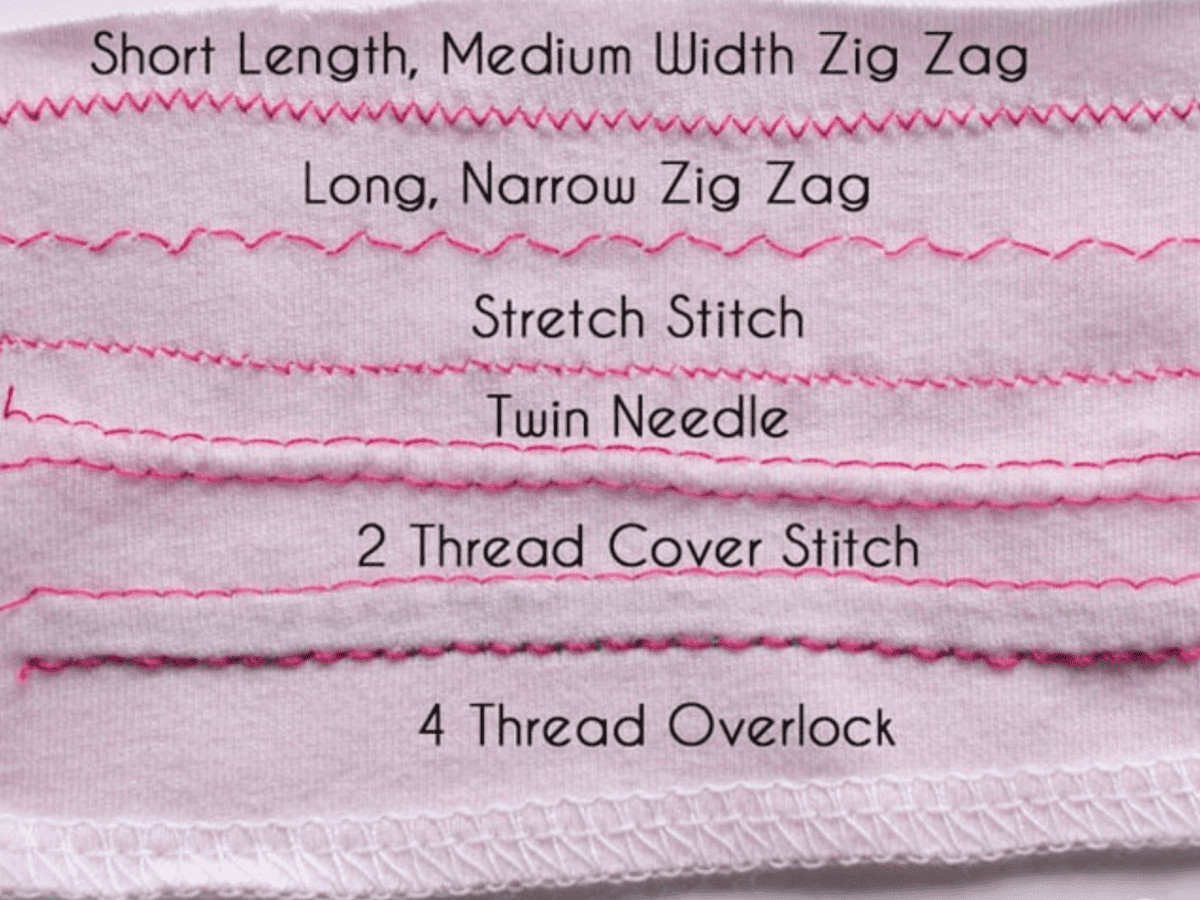
Twin Needles: These consist of two needles attached to a single shank. They are used on the top side of the fabric to create two parallel stitches, while a single bobbin thread forms a zigzag stitch on the underside. This combination results in a stretchy, professional-looking hem or decorative stitch that can expand with the fabric.
Twin needles are excellent for hemming t-shirts and creating decorative effects on knits.
- Universal Needles: While a universal needle can sometimes work for very stable knits, it’s generally not recommended for most stretchy fabrics. Their sharper point can pierce and damage knit fibers, leading to runs and skipped stitches. It’s best to reserve universal needles for woven fabrics.
Adjusting Stitch Length and Tension for Stretchy Knits
Beyond the needle, your sewing machine’s stitch settings play a crucial role in achieving successful knit sewing. Incorrect settings can cause puckering, stretching of the fabric as you sew, and weak seams.
-
Stitch Length: For most knit fabrics, a slightly longer stitch length than you would use for woven fabrics is recommended. A stitch length of 2.5 to 3.0 millimeters is a good starting point. A shorter stitch length can cause the fabric to gather and pucker as the needle pierces it repeatedly in close succession.
A longer stitch length allows the fabric to move more freely and creates a seam that has more give.
- Tension: Knit fabrics often require a slightly lower upper tension setting compared to woven fabrics. This is because the fabric itself has inherent stretch, and too much tension from the machine can cause it to ripple or pucker. It’s essential to test your tension on scraps to find the sweet spot where the stitches are balanced on both the top and bottom without distorting the fabric.
Methods for Testing Stitch Settings on Fabric Scraps
Before you commit to sewing your garment, always perform a test run on a scrap of the exact same fabric you’ll be using. This is the most effective way to ensure your machine is set up correctly and to troubleshoot any potential issues before they become problematic on your project.
- Prepare Test Strips: Cut several strips of your knit fabric, approximately 4-6 inches long and 1-2 inches wide. These strips should be the same grain as your garment pieces.
- Sew Straight Lines: Using your chosen needle and thread, sew straight lines down each test strip. Vary your stitch length and tension settings. For example, sew one strip with a standard stitch length and tension, then another with a slightly longer stitch length, and another with slightly reduced upper tension.
-
Evaluate the Results: After sewing, examine each strip closely.
- Skipped Stitches: Look for any missing stitches on the top or bottom of the fabric.
- Puckering: Observe if the fabric is rippling or gathering along the seam line.
- Stitch Appearance: Check that the stitches are balanced, with no excessive thread loops on either side.
- Stretch Test: Gently stretch the sewn seam. The stitches should stretch with the fabric without breaking or distorting the fabric excessively.
- Adjust and Re-test: Based on your evaluation, make adjustments to your stitch length and tension. If you have skipped stitches, try a different needle type (e.g., a stretch needle if you were using a ballpoint) or slightly adjust your tension. If you have puckering, try a longer stitch length or lower tension. Continue testing until you achieve a smooth, even stitch that stretches with the fabric.
Comparison of Common Stitch Types Suitable for Knits
Different stitch types offer varying degrees of stretch and durability, making them suitable for specific applications on knit garments. Understanding these options will help you choose the best stitch for your project’s needs.
| Stitch Type | Description | Applications for Knits | Notes |
|---|---|---|---|
| Zigzag Stitch | A stitch that moves back and forth, creating a zigzag pattern. The width and length can often be adjusted. | Seam finishing, edge finishing, attaching elastic, decorative stitching. A narrow zigzag (e.g., 1.0-1.5mm width) can provide some stretch for seams. | A wider zigzag offers more stretch and is good for enclosing raw edges. |
| Overlock Stitch (Serger/Overlocker) | A specialized stitch created by a serger or overlocker machine, which trims, stitches, and finishes the edge simultaneously with multiple threads. | Constructing seams, edge finishing, creating lettuce edges. This is the most common and professional stitch for knit garment construction due to its inherent stretch and durability. | Requires a dedicated serger machine. Offers excellent seam strength and stretch. |
| Stretch Stitch (e.g., Lightning Bolt Stitch, Tricot Stitch) | Many sewing machines have a specific “stretch” stitch, often depicted as a lightning bolt or a series of short, forward-and-backward stitches. This stitch is designed to move with the fabric. | Seam construction on knit fabrics when a serger is not available. It provides a secure and stretchy seam. | Refer to your sewing machine manual for the specific stretch stitch available and its recommended settings. |
| Straight Stitch (with caution) | A standard forward stitch. | Generally not recommended for seams on stretchy knits as it lacks stretch and can break when the fabric is pulled. Can be used for very stable knits or for topstitching where minimal stretch is needed. | If used for seams, it’s often combined with a serger or a zigzag stitch for durability. |
| Twin Needle Stitch | Two parallel straight stitches on the top, with a zigzag stitch on the underside. | Hemming knit garments, creating decorative parallel lines. | Provides a professional, ready-to-wear look for hems and can stretch with the fabric. |
Sewing Techniques for Stretchy Knits
Working with stretchy knit fabrics opens up a world of comfortable and stylish garment possibilities. However, their inherent stretch can present unique challenges if not handled with the right techniques. This section will guide you through essential sewing methods that ensure your knit projects are not only beautiful but also durable and professionally finished.
Sewing Seams on Knit Fabrics
The key to sewing seams on knits without stretching them out lies in maintaining an even feed of the fabric through your sewing machine and using stitches that can accommodate movement. Stretchy fabrics require stitches that can also stretch; otherwise, your seams will break when the fabric is pulled.Here are the primary methods for achieving stable and flexible seams on knit fabrics:
- Using a Stretch Stitch: Most modern sewing machines offer a variety of stretch stitches. These stitches are designed to mimic the look of a straight stitch but have built-in elasticity. Look for stitches that appear slightly zigzagged or have a lightning bolt pattern. A narrow zigzag stitch (about 1-2 mm width and 2-3 mm length) is a reliable option.
- Employing a Serger/Overlocker: A serger is the ideal tool for sewing knits. It stitches, trims, and finishes the seam edge all in one pass, creating a durable and flexible seam that moves with the fabric. A differential feed on the serger allows you to adjust the fabric feed to prevent stretching or gathering, ensuring perfectly balanced seams.
- The Triple Straight Stitch: Some machines offer a triple straight stitch, which sews forward, backward, and then forward again in the same line. This creates a very strong and slightly elastic seam. It’s a good alternative if you don’t have a specific stretch stitch or a serger.
- Ballpoint or Stretch Needles: As discussed in the previous section, using the correct needle is crucial. Ballpoint needles push the fabric fibers apart rather than piercing them, preventing skipped stitches and holes. Stretch needles have a specially designed eye to reduce lint buildup and prevent skipped stitches.
When sewing, it’s important to let the machine do the work and avoid pulling or pushing the fabric. Guide the fabric gently to ensure an even stitch length and consistent seam allowance.
Hemming Knit Garments
Hemming knits can be tricky, often resulting in wavy or stretched-out hems, or a hem that curls upwards. The goal is to create a smooth, flat hem that moves with the fabric and doesn’t distort its shape.Effective hemming techniques include:
- Using a Double Needle: This is perhaps the most popular and effective method for hemming knits. A double needle creates two parallel rows of straight stitches on the top of the fabric and a zigzag stitch on the wrong side, which allows the hem to stretch. Use a ballpoint or stretch double needle.
- The Coverstitch Machine: For a professional, ready-to-wear finish, a coverstitch machine is ideal. It creates a series of parallel stitches on the right side and a serged edge on the wrong side, offering excellent stretch and durability.
- A Narrow Rolled Hem (with Serger): Many sergers can be set up to create a narrow rolled hem. This is a very fine and neat hem that works well on lighter-weight knits. Ensure the differential feed is adjusted correctly to prevent waviness.
- Using a Stabilizing Tape: For very stretchy or slinky knits, you can apply a lightweight fusible knit interfacing or a wash-away stabilizer tape to the wrong side of the hem allowance before folding and stitching. This provides extra stability without adding bulk.
When hemming with a double needle or coverstitch, fold the hem to the wrong side and press it in place. Stitch from the right side, ensuring the fabric is not stretched as you feed it through the machine. For a truly professional look, consider pressing the hem from the wrong side after stitching.
Attaching Neckbands and Cuffs
Attaching neckbands and cuffs requires careful measurement and sewing to ensure a snug yet comfortable fit without distorting the neckline or sleeve opening. The key is to cut the neckband and cuff pieces to the correct length and to stretch them evenly as you attach them.Follow these steps for successful attachment:
- Measure and Cut: For neckbands, a common guideline is to cut the band about 75-85% of the length of the neckline opening, depending on the stretch of your fabric. For cuffs, measure the wrist opening or the desired fit and adjust the length accordingly. Always test on a scrap if unsure.
- Prepare the Band/Cuff: Fold the neckband or cuff piece in half lengthwise, wrong sides together, and press. If it’s a two-piece cuff, join the short ends to form a loop, then fold in half lengthwise.
- Mark and Pin: Find the quarter points of both the neckline/opening and the prepared neckband/cuff. Mark these points with pins or clips.
- Sewing the Attachment: Place the neckband/cuff right sides together with the neckline/opening, aligning the raw edges and the quarter marks. Begin sewing at one of the quarter marks, gently stretching the neckband/cuff evenly between your fingers as you sew, so it matches the length of the neckline/opening. Use a stretch stitch, serger, or double needle.
- Finishing: Press the seam allowance towards the garment body. For neckbands, you might press the seam allowance towards the band itself for a cleaner finish.
The even stretching of the band/cuff is paramount. Too little stretch will result in a gaping opening, while too much stretch will make it too tight.
Sewing Buttonholes on Stretchy Knits
Creating buttonholes on stretchy knits can be challenging due to the fabric’s tendency to distort or fray. Special considerations are needed to ensure neat, functional buttonholes that don’t stretch out of shape.Here’s how to approach sewing buttonholes on knits:
- Stabilize the Area: Before cutting the buttonhole, stabilize the fabric. This is the most critical step. You can use a piece of lightweight fusible interfacing, a tear-away stabilizer, or a wash-away stabilizer. Fuse or baste the stabilizer to the wrong side of the fabric where the buttonhole will be placed. Ensure it extends beyond the buttonhole area.
- Mark the Buttonhole Accurately: Use a disappearing ink pen or chalk to mark the exact position and length of your buttonhole. The length should be just slightly longer than the button you intend to use.
- Use a Buttonhole Foot: Most sewing machines come with an automatic buttonhole foot that measures the buttonhole length and sews it automatically. If you don’t have one, use a standard zipper foot or a regular sewing foot, and carefully mark the start and end points.
- Select the Right Stitch: Use your machine’s buttonhole stitch. This is typically a dense zigzag stitch. If your machine has a specific stretch buttonhole stitch, use that. Ensure the stitch width is appropriate for your stabilizer and fabric.
- Sew the Buttonhole: Sew the buttonhole slowly and steadily, allowing the machine to guide the fabric. Do not pull or push.
- Cut the Buttonhole: After sewing, carefully cut open the buttonhole using a seam ripper. Insert the tip of the seam ripper under the stitches and slide it through the center of the buttonhole. Be cautious not to cut through the stitches at either end. If you used a stabilizer, you can now carefully tear it away or rinse it out, depending on the type.
For very delicate or highly stretchy knits, consider using a buttonhole template made from cardstock or a heavy stabilizer to guide your stitches more precisely.
Finishing and Pressing Knit Garments
Successfully finishing and pressing knit garments is crucial for achieving a professional and polished look. Unlike woven fabrics, knits require a gentler approach to maintain their shape and prevent distortion. This section will guide you through the best practices for pressing, using stabilizers, trimming seams, finishing edges, and expertly handling corners and curves.
Pressing Knit Fabrics
Pressing knit fabrics demands a different technique than pressing wovens. The goal is to set seams and shape the garment without stretching or flattening the characteristic elasticity of the knit. Avoid direct, heavy pressure. Instead, utilize the steam and weight of the iron to gently coax the fabric into place.
- Use a Pressing Cloth: Always place a press cloth (a piece of cotton muslin or a specialized pressing cloth) between your iron and the knit fabric. This protects the fibers from direct heat and prevents shine marks or scorch damage.
- Low to Medium Heat: Set your iron to the appropriate heat setting for your specific knit fabric type. Synthetics and blends generally require lower heat than cotton knits. Always test on a scrap piece first.
- Steam is Your Friend: Utilize the steam function on your iron. Steam helps to relax the fibers and set the seam without the need for excessive pressure. Hold the iron slightly above the fabric, allowing the steam to penetrate.
- “Press” Rather Than “Iron”: Instead of the typical back-and-forth ironing motion, use a “pressing” technique. Place the iron down on the fabric, hold it for a few seconds, and then lift it. Repeat this process along the seam or area you are pressing. This minimizes the risk of stretching.
- Press Seams Open or to One Side: For most knit seams, pressing them open is preferable to reduce bulk. However, for certain knits or specific design elements, pressing to one side might be appropriate. Ensure both sides of the seam are pressed consistently.
Interfacing and Stabilizers for Knit Fabrics
While many knit garments do not require interfacing, certain areas benefit greatly from added stability. Interfacing or stabilizers can prevent stretching, provide structure, and ensure that details like collars, plackets, and buttonholes maintain their intended shape.
- Types of Stabilizers:
- Lightweight fusible knit interfacing: This is the most common choice for knits. It has some stretch to match the fabric and is ideal for collars, cuffs, and plackets.
- Woven fusible interfacing: Use sparingly and only for areas that need significant structure and do not require stretch, such as buttonhole plackets on very stable knits.
- Stay tape or twill tape: For reinforcing shoulder seams or preventing stretching along necklines, a strip of stay tape or twill tape can be applied.
- Clear elastic: Can be used to stabilize curved seams like necklines or armholes to prevent them from stretching out of shape.
- Application Methods:
- Fusible Interfacing: Follow the manufacturer’s instructions for fusing. Ensure the correct temperature and pressing time are used. For knits, it’s often beneficial to press from the wrong side of the fabric with a press cloth.
- Sewn-in Interfacing: Some knit interfacings are designed to be sewn in. This can be a good option for very delicate knits where fusing might be too harsh.
- Stay Tape/Twill Tape: This is typically sewn into the seam allowance or along the edge of the fabric before constructing the main seam.
- Consider Stretch Direction: When choosing fusible interfacing, ensure its stretch direction matches the stretch direction of your knit fabric.
Trimming Seam Allowances and Finishing Raw Edges
Properly trimming seam allowances and finishing raw edges on knit garments prevents bulk and fraying, contributing to a clean and durable finish. The methods used should respect the fabric’s stretch.
- Trimming Seam Allowances:
- Standard Seam Allowances: For most knit seams, a standard 1/2 inch (1.25 cm) or 5/8 inch (1.5 cm) seam allowance is suitable.
- Reducing Bulk: In areas with multiple seams or where bulk is a concern, you can trim one side of the seam allowance by half. This creates a smoother finish, especially when pressing seams to one side.
- Zigzag or Serger: If not using a serger, finish the raw edges of the seam allowance with a narrow zigzag stitch or a serger overlock stitch to prevent unraveling.
- Finishing Raw Edges:
- Serging: A serger is the most efficient tool for finishing raw edges on knits, creating a clean, professional, and durable edge in one step.
- Narrow Rolled Hem: For the bottom hem or sleeve hems, a narrow rolled hem created with a serger or a special rolled hem foot on a sewing machine provides a neat and flexible finish.
- Double Fold Hem: A double fold hem, where the raw edge is folded up twice and then stitched, is a classic and effective method. Use a twin needle or a coverstitch machine for a professional look.
- Banding: Neckbands, cuffs, and waistbands are often finished by attaching a separate band of knit fabric. This provides a clean edge and a professional finish.
Handling Knit Fabric When Turning Corners or Curves
Turning corners and curves on knit fabrics requires a delicate touch to ensure a smooth, unpuckered finish. The inherent stretch of the fabric can make these areas prone to distortion if not handled carefully.
- Clipping and Notching Curves:
- Clipping: For outward curves (like the bottom of a sleeve cap), clip small V-shaped notches into the seam allowance, getting close to the stitching line but not cutting through it. This allows the seam allowance to spread and lie flat.
- Notching: For inward curves (like armholes), cut small triangular notches out of the seam allowance. This removes excess fabric and prevents it from bunching up.
- Easing Corners:
- Gentle Folding: When turning a sharp corner, gently ease the fabric around the corner with your fingers. Avoid pulling or stretching the fabric taut.
- Small Stitches: For very precise corners, consider using a slightly shorter stitch length in the immediate corner area to help it hold its shape.
- Stay Stitching: For curved necklines or armholes, stay stitching a row of straight stitches just inside the seam allowance (within the seam allowance itself) can help prevent stretching as you handle the fabric.
- Pressing Corners and Curves: After clipping or notching, gently press the seam allowance away from the garment. Use the pressing technique described earlier, with a press cloth and steam, to coax the fabric into a smooth shape. For corners, you may need to use a tailor’s ham or sleeve board to help shape them correctly.
Common Challenges and Solutions When Sewing Knits
Sewing with stretchy knit fabrics can be a rewarding experience, allowing you to create comfortable and stylish garments. However, knit fabrics often present unique challenges that can lead to frustration if not addressed properly. Understanding these common issues and knowing how to troubleshoot them will significantly improve your sewing success. This section will guide you through identifying and resolving the most frequent problems encountered when working with knits.This guide will explore common pitfalls and offer practical, effective solutions to ensure a smooth and enjoyable sewing process.
We will cover everything from stitch imperfections to fabric handling, providing you with the knowledge to overcome these hurdles with confidence.
Skipped Stitches and Uneven Stitching
Skipped stitches and uneven stitching are among the most common complaints when sewing knits. This can result in seams that are weak and aesthetically unappealing. Fortunately, most of these issues stem from a few key factors related to your needle, thread, and machine settings.Several factors contribute to skipped stitches and uneven stitching:
- Incorrect Needle Type: Using a universal needle on knits can cause it to push the fabric loop down, leading to skipped stitches. A ballpoint or stretch needle has a rounded tip that glides between the fabric fibers, preventing snagging and skipped stitches.
- Worn-Out Needle: A dull or bent needle can also cause skipped stitches, snagging, and fabric damage. Needles should be replaced regularly, typically after every 6-8 hours of sewing time or after completing a few projects.
- Improper Thread Tension: Too much or too little tension can cause stitches to pucker or skip. It’s essential to test your tension on a scrap of the same knit fabric before sewing your garment.
- Incorrect Stitch Selection: Using a straight stitch on very stretchy knits can cause the stitches to break when the fabric is stretched. A zigzag stitch, a serger overlock stitch, or a stretch stitch is generally recommended.
Wavy or Stretched Seams
Wavy or stretched seams are often a consequence of the fabric being pulled or pushed through the sewing machine incorrectly, or using the wrong stitch. This results in a distorted and unprofessional finish.To achieve smooth, unblemished seams:
- Avoid Pulling the Fabric: Allow the feed dogs of your sewing machine to do the work of moving the fabric. Gently guide the fabric without pulling or stretching it as it passes under the needle.
- Use a Walking Foot: A walking foot (also known as aEven Feed Foot) has built-in feed dogs that grip the top layer of fabric, synchronizing its movement with the machine’s lower feed dogs. This prevents differential feeding and results in much smoother seams, especially on slippery or thick knits.
- Adjust Presser Foot Pressure: Many sewing machines have an adjustable presser foot pressure. Reducing this pressure can help prevent the presser foot from stretching the knit fabric as it sews. Experiment with lower settings on a scrap piece.
- Consider a Serger: A serger (overlock machine) is specifically designed to sew knits. Its differential feed feature allows you to control the rate at which the fabric is fed from the top and bottom, preventing stretching and puckering, and its blades trim the seam allowance simultaneously for a clean finish.
Fabric Curling at Edges
Knit fabrics, especially those with a pronounced bias or looser weaves, have a tendency to curl at the cut edges. This can make accurate cutting and sewing very difficult.To manage and prevent fabric curling:
- Pre-Wash and Dry: Always pre-wash and dry your knit fabric according to the fabric care instructions. This can help stabilize the fibers and reduce some of the tendency to curl.
- Use Weights or Clips: Instead of pins, which can distort the fabric, use pattern weights or binder clips to hold pattern pieces in place. For cutting, use a rotary cutter and mat, or very sharp shears, and cut carefully to avoid disturbing the edges.
- Stabilize Edges: For very unruly edges, you can temporarily stabilize them before cutting or sewing.
- Lightweight Interfacing: Apply a lightweight fusible knit interfacing to the wrong side of the fabric along the cut edge. This adds stability without significant bulk.
- Stitch-Witchery or Fusible Tape: A thin strip of fusible web or tape can be fused along the edge to provide a temporary hold.
- Hand Basting: For precise work, a simple hand-basted line of stitching along the edge can prevent curling during cutting and initial handling.
- Cut Carefully: When cutting, lay the fabric flat and smooth it out. Cut in one fluid motion with sharp scissors or a rotary cutter. Avoid stretching the fabric as you cut.
Managing Seam Allowances on Knit Fabrics
Managing seam allowances on knit fabrics is crucial for reducing bulk and ensuring a professional finish, especially in areas like necklines, armholes, and hems. Different methods can be employed depending on the fabric weight and desired outcome.Here are several effective methods for managing seam allowances on knit fabrics:
- Trimming Seam Allowances: For most knit seams, trimming the seam allowance to a narrower width (e.g., 1/4 inch or 0.6 cm) can significantly reduce bulk. This is particularly effective when sewing with sergers, as they trim as they sew.
- Notching and Clipping: In curved areas, notching (cutting small triangles out of the seam allowance) or clipping (making small cuts into the seam allowance) helps the seam lie flat. For knits, these should be small and numerous rather than large and few, to avoid weakening the seam.
- Using a Serger: As mentioned, a serger trims and finishes the seam allowance in one step. The width of the trim can be adjusted, offering excellent control over seam allowance bulk.
- Folding and Stitching: For very thick knits, after sewing the seam, you can fold the seam allowance flat against the garment and stitch it down with a topstitch, or zig-zag stitch, close to the seam line. This encases the raw edge and reduces bulk.
- “Serged” Seam Allowance Finish (on a regular machine): If you don’t have a serger, you can mimic its effect. After sewing a seam with a stretch stitch, trim one layer of the seam allowance slightly narrower than the other. Then, use a zigzag stitch or a mock serger stitch to enclose the raw edge of the wider seam allowance.
Sewing with Very Thin or Slippery Knit Fabrics
Working with delicate and slippery knits like rayon jersey, silk jersey, or lightweight synthetics can be particularly challenging. They tend to shift, stretch excessively, and are prone to snagging.To successfully sew thin or slippery knit fabrics:
- Use a Microtex or Sharp Needle: These needles have a finer point and are designed to penetrate fine weaves without snagging or creating holes. A size 60/8 or 70/10 is often suitable.
- Apply Stabilizer: A layer of lightweight, water-soluble stabilizer (like Sulky Sticky Fabri-Solvy or tear-away stabilizer) placed between the fabric layers or under the fabric can prevent slippage and provide a stable surface for sewing. It can be easily removed after sewing by rinsing or tearing away.
- Reduce Presser Foot Pressure: As with other knits, reducing the presser foot pressure is crucial. Some machines have a “walking foot” setting or an option to lower the foot pressure.
- Use a Straight Stitch Needle Plate: If your machine has one, a straight stitch needle plate (which has a smaller hole for the needle) can help prevent thin knits from being pulled down into the bobbin area, which is a common issue with slippery fabrics.
- Consider Hand-Sewing: For extremely delicate or slippery knits, hand-sewing with a fine needle and thread can offer more control and precision than machine sewing. Techniques like a backstitch or a small, tight running stitch can create durable and neat seams.
- French Seams (with caution): While French seams are typically used for woven fabrics, they can be adapted for some knits to enclose raw edges. However, they add bulk, so this method is best suited for knits that are not overly stretchy or thick.
Conclusion
As we conclude our exploration of sewing with stretchy knit fabrics, you are now empowered with the knowledge and techniques to tackle any knit project with assurance. From understanding fabric properties to overcoming common hurdles, this guide has provided a solid foundation for creating garments that are both stylish and comfortable. Embrace the versatility of knits and let your creativity flow, knowing you have the skills to bring your vision to life beautifully.